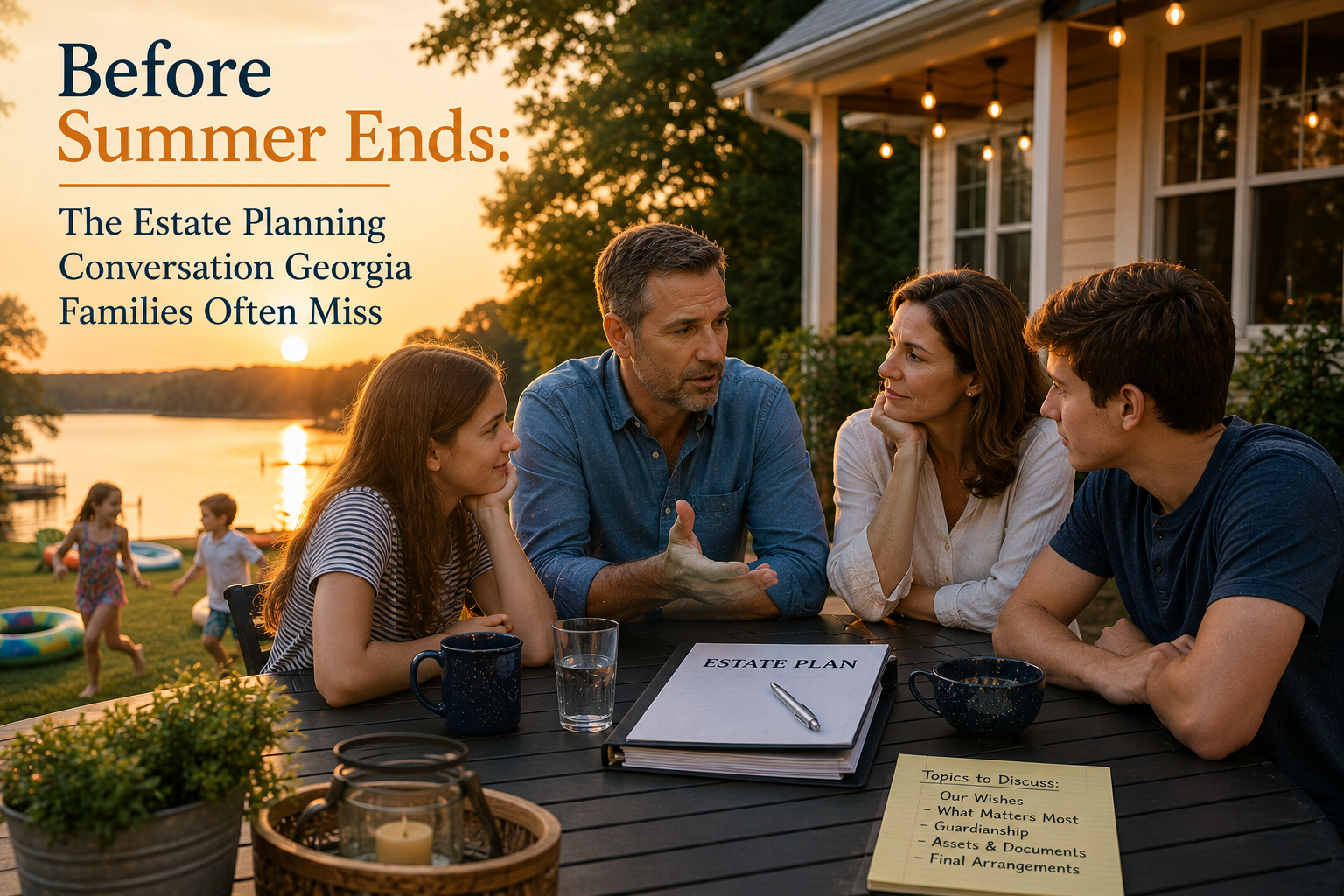
For many families, a vacation property feels like it belongs to everyone.
The lake house may be where grandchildren spend their summers. A mountain cabin may host Thanksgiving every year. A beach property may have been the destination for decades of family vacations.
Everyone uses it. Everyone has memories there. Everyone may even help take care of it.
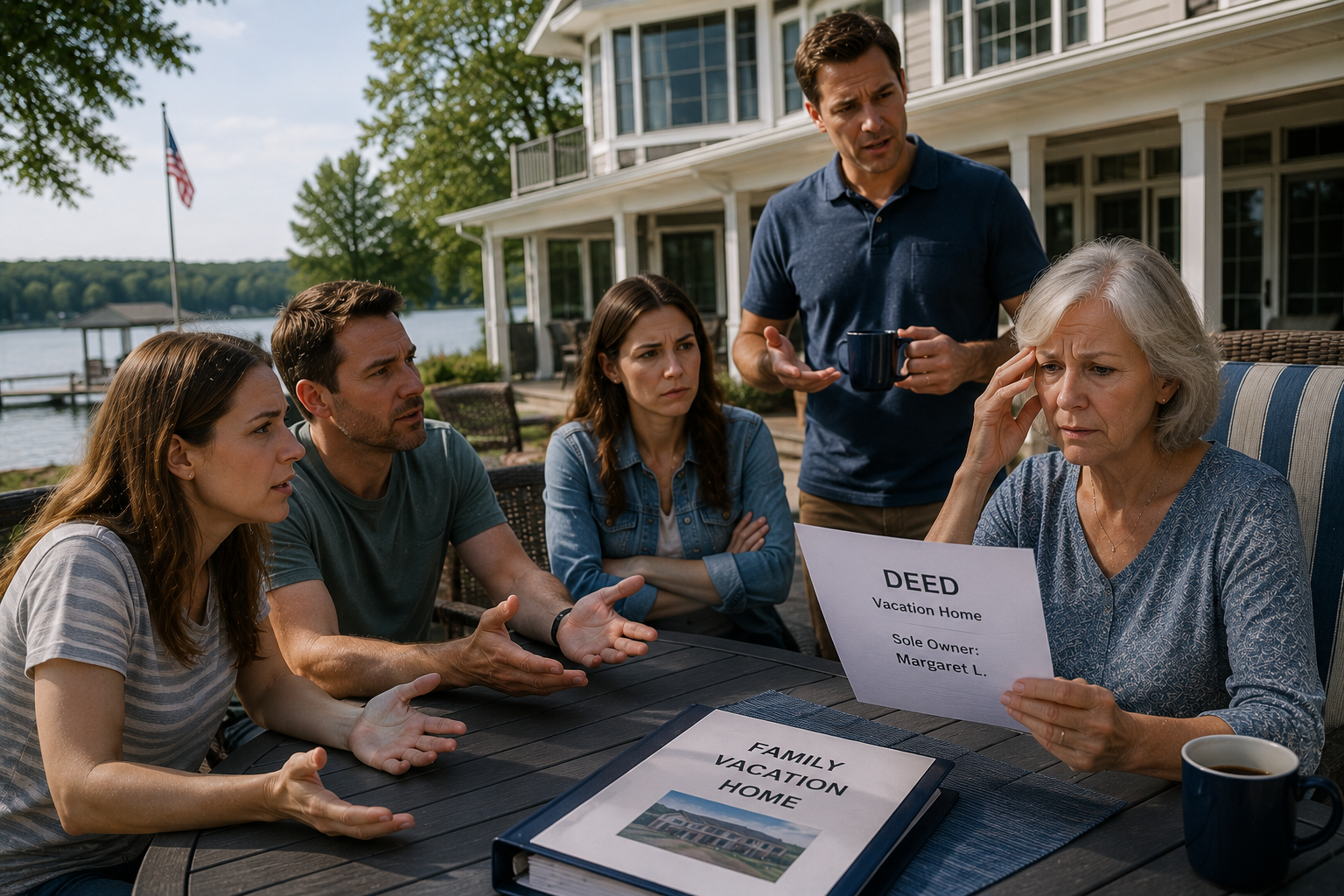
Legally, however, the property may belong to just one person.
That difference between how a family thinks about a property and who actually owns it can become an important estate planning issue. If the owner dies without a clear plan for the property’s future, years of informal family traditions can quickly give way to difficult questions about ownership, expenses, access, and whether the property should be kept at all.
As another summer winds down in 2026, it is a good time for Georgia property owners to consider what they actually want to happen to the places their families share.
Family Use Does Not Necessarily Mean Family Ownership
When relatives have used a property for years, it is easy for an informal sense of shared ownership to develop.
Adult children may have their own keys. Grandchildren may think of the property as part of the family. Siblings may help with repairs or contribute toward expenses.
But those arrangements do not necessarily determine legal ownership.
The deed and the owner’s estate planning arrangements play a much more important role in determining what happens to the property in the future.
That can come as a surprise to family members who have always thought of the property as “ours.”
Summer Traditions Can Create Future Expectations
Vacation properties are different from many other assets because people form emotional connections to them.
A brokerage account rarely comes with memories of:
- Learning to swim off the dock
- Annual Fourth of July gatherings
- Family fishing trips
- Summer weekends with grandparents
- Holidays spent together
- Watching children and grandchildren grow up
Those memories can create an expectation that the property will always remain available to the family.
But unless the owner has actually planned for that outcome, there may be no guarantee that the tradition will continue.
What Does the Owner Actually Want?
This is the question that should come before discussions about legal structure.
Does the owner want the property to:
- Stay in the family for another generation?
- Go to one particular child?
- Be shared among several beneficiaries?
- Be sold and the proceeds divided?
- Remain available for children and grandchildren to use?
Families sometimes avoid these conversations because everyone assumes the answer is obvious.
It may not be.
Learn more about planning for significant family assets on our Estate Planning Services page:
Leaving the Property to Everyone Can Create New Problems
An owner may think the simplest solution is to leave the vacation property equally to all of the children.
Sometimes that works.
But shared ownership also means shared responsibility.
The new owners may need to agree about:
- Property taxes
- Insurance
- Repairs
- Renovations
- Utilities
- Scheduling
- Guests
- Renting the property
- Eventually selling it
The siblings who enjoyed vacationing together as children may have very different financial circumstances and priorities as adults.
What If One Child Wants to Keep It and Another Wants to Sell?
This is one of the most important questions to consider before transferring a shared family property.
One beneficiary may feel deeply attached to the home.
Another may live across the country and rarely use it.
A third may love the property but be unable to afford their share of the ongoing expenses.
If everyone inherits an ownership interest without a clear plan, those differences can become difficult to resolve.
Estate planning provides an opportunity to think about those possibilities before ownership changes hands.
Someone Has to Pay for the Property
Keeping a vacation home in the family requires more than sentimental attachment.
There may be ongoing costs for:
- Property taxes
- Insurance
- Utilities
- Landscaping
- Repairs
- Major maintenance
- Association fees
- General upkeep
A property can become a burden if beneficiaries inherit it without the financial resources or agreement necessary to maintain it.
Planning should therefore consider not only who gets the property, but also how continued ownership will work.
Informal Arrangements Become Harder Across Generations
A system may work perfectly while one person owns the property.
Mom owns the lake house and tells everyone when they can use it. She pays the taxes, schedules repairs, and makes the final decisions.
After her death, three children may own it.
Years later, those ownership interests could potentially involve grandchildren and additional branches of the family.
What began as a simple family retreat can become increasingly complicated as more people acquire an interest in it.
Thinking several years ahead can help families decide whether continued shared ownership is realistic.
The Property May Mean Different Things to Different People
Owners should also avoid assuming that their children feel the same way about the property that they do.
A parent may view the family cabin as an important part of the family’s legacy.
An adult child may associate it with wonderful memories but have no desire to own it.
Another may desperately want to preserve it.
Neither perspective is necessarily wrong.
Understanding those differences before creating a plan can help avoid leaving beneficiaries with an arrangement none of them expected.
Documentation Matters
If the goal is continued family use, relying on statements such as “you kids can work it out” may create unnecessary uncertainty.
Depending on the owner’s goals and circumstances, estate planning can address issues involving:
- Ownership
- Management
- Distribution
- Decision-making
- Successor responsibilities
The appropriate strategy will depend on the property, the family, and the owner’s long-term intentions.
What If the Vacation Property Is Outside Georgia?
Georgia residents frequently own vacation property in other states.
A family might live in Suwanee while owning a beach property in Florida, a cabin in North Carolina, or land elsewhere.
Real estate is generally subject to important legal considerations in the state where the property is located, so owning property across state lines can add another layer to estate planning.
If your estate includes out-of-state real estate, it is worth discussing that property specifically when reviewing your overall plan.
For more information about probate and estate administration, visit our Probate page:
Late Summer Is a Good Time to Have the Conversation
By August, many families have just spent another season using their shared vacation property.
That makes late summer an especially natural time to notice how the property actually functions.
Consider asking:
- Who uses the property most?
- Who helps maintain it?
- Who would realistically want to own it?
- Could the intended beneficiaries afford the ongoing costs?
- Would shared ownership work for this family?
- Have I clearly documented what I want to happen?
These questions are easier to address while the owner can still guide the conversation.
Preserving the Tradition Requires More Than Preserving the Property
Keeping a vacation home does not automatically preserve family harmony.
Sometimes the best way to protect a family tradition is to create a clear structure for continued ownership. In other situations, selling the property may ultimately make more sense.
There is no single answer that works for every family.
What matters is making the decision intentionally rather than assuming future generations will figure it out.
Final Thoughts
A family vacation home can hold decades of memories, even when only one person’s name appears on the deed.
If you want your children or grandchildren to continue enjoying that property after you are gone, your estate plan should reflect that goal clearly. And if you do not expect the property to remain in the family, communicating that intention can prevent unrealistic expectations.
Hurban Law can help Georgia families evaluate how vacation homes, second homes, and other significant real estate fit into a broader estate plan so that legal ownership and family expectations are better aligned.