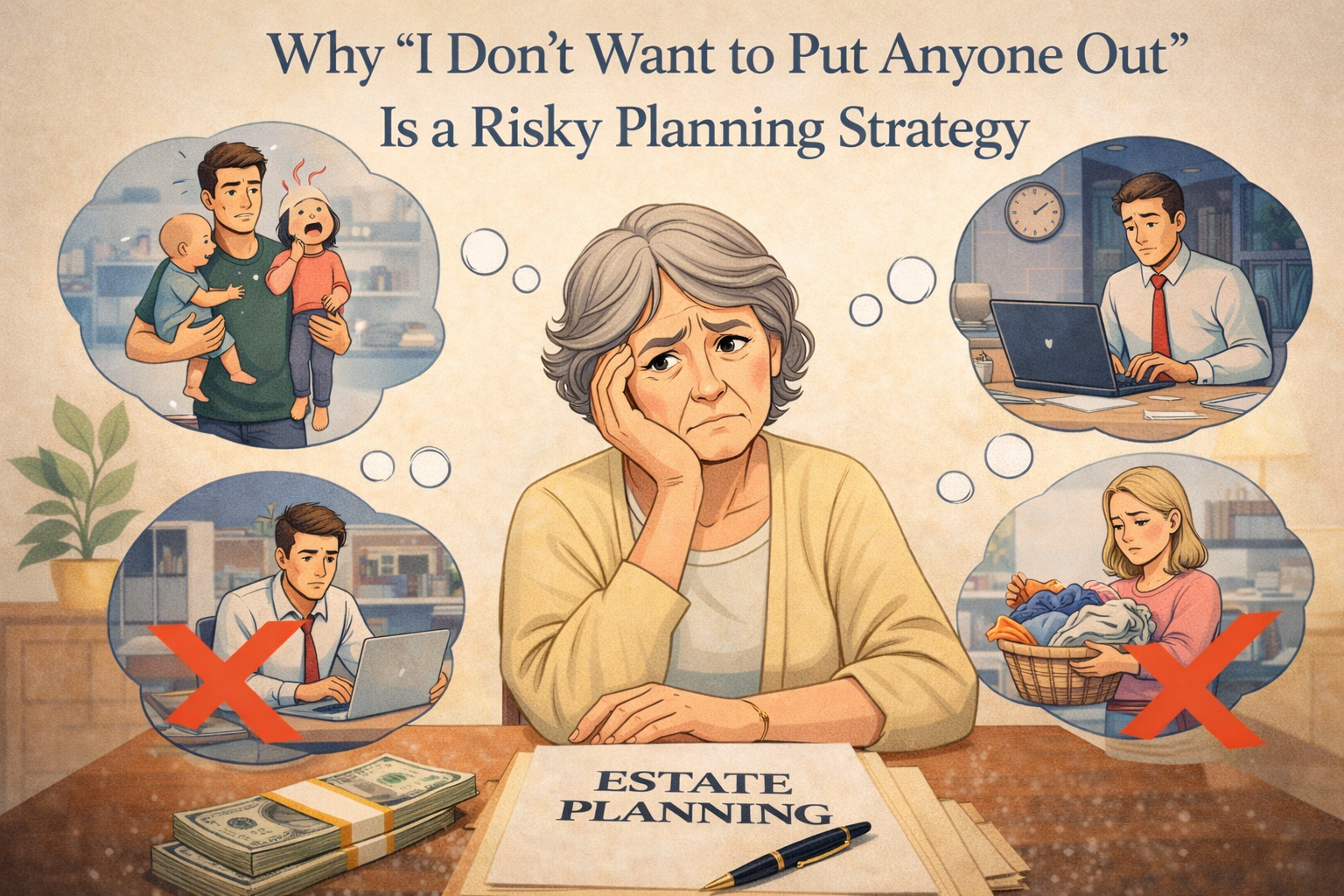
Estate planning is often discussed in terms of documents, assets, and legal requirements. What’s discussed far less often is the emotional weight families carry when plans are unclear, outdated, or missing altogether. In many cases, the greatest burden an estate leaves behind is not financial — it’s emotional.
In 2026, effective estate planning is increasingly about reducing stress, uncertainty, and emotional strain for the people left behind.
The Emotional Reality Families Face After Death or Incapacity
When someone passes away or becomes incapacitated, families are often navigating:
- Grief and emotional exhaustion
- Shock or sudden responsibility
- Uncertainty about what to do next
- Fear of making the wrong decision
- Pressure from other family members
- Time-sensitive financial or medical decisions
When estate plans are unclear, these emotional pressures are amplified.
How Unclear Planning Increases Emotional Stress
Even well-meaning families can struggle when guidance is missing.
Common sources of emotional strain include:
- Disagreements over what the person “would have wanted”
- Confusion about who has authority
- Guilt over decisions made under pressure
- Tension between siblings or relatives
- Fear of being blamed for outcomes
Without clarity, families are forced to make decisions in emotionally charged moments, often without confidence or consensus.
Georgia courts step in when authority is unclear, which can add stress, delay, and loss of privacy.
Why Emotional Load Matters in Estate Planning
Estate planning is not just about outcomes — it’s about the experience families go through.
An effective plan helps families by:
- Reducing uncertainty
- Limiting second-guessing
- Preventing unnecessary conflict
- Allowing people to grieve without added pressure
- Providing reassurance that decisions are guided, not arbitrary
When emotional load is reduced, families are better able to support one another.
Where Estate Planning Has the Greatest Emotional Impact
Certain areas of planning have an outsized effect on emotional well-being.
Decision-Making Authority
When it’s clear who is in charge, families avoid power struggles and confusion during stressful times.
Clear Instructions
Specific guidance helps loved ones act confidently instead of guessing or arguing about intent.
Thoughtful Fiduciary Choices
Choosing the right executor, trustee, or agent reduces tension and protects relationships.
Incapacity Planning
Advance planning for incapacity allows families to act quickly and calmly if health declines.
Learn more about proactive planning approaches on our Estate Planning Services page.
How Estate Planning Shifts Emotional Burden Away From Loved Ones
Without planning, families often carry the emotional weight of decision-making alone. With thoughtful planning, that burden shifts to the structure of the plan itself.
A strong estate plan:
- Answers questions before they arise
- Removes pressure from individuals
- Provides a roadmap during uncertainty
- Prevents loved ones from feeling responsible for outcomes
Instead of asking family members to decide, the plan does the deciding.
Emotional Load and Long-Term Family Relationships
The emotional strain of estate administration doesn’t always end when the estate is closed.
Unclear or poorly planned estates can leave behind:
- Lingering resentment
- Broken relationships
- Long-term mistrust
- Family members who no longer speak
Reducing emotional load isn’t just about the moment — it’s about protecting relationships for years to come.
For more on how estate administration unfolds, visit our Georgia Probate Lawyer page.
What Reducing Emotional Load Looks Like in Practice
In 2026, estate plans that reduce emotional strain tend to be:
- Clear rather than vague
- Practical rather than overly complex
- Updated rather than outdated
- Designed with real family dynamics in mind
- Focused on guidance, not control
These plans work quietly in the background, allowing families to focus on healing rather than logistics.
Steps Families Can Take to Reduce Emotional Burden
Reducing emotional load doesn’t require perfection. It requires intention.
Helpful steps include:
- Reviewing estate plans regularly
- Clarifying roles and authority
- Updating fiduciary appointments as life changes
- Addressing sensitive issues directly in the plan
- Ensuring incapacity planning is complete
Even small updates can make a meaningful difference.
Final Thoughts
Estate planning is one of the most effective ways to care for your family emotionally, not just financially. Clear, thoughtful planning removes uncertainty, reduces stress, and allows loved ones to focus on supporting one another rather than navigating confusion.
If your estate plan hasn’t been reviewed recently, or if it was created without considering the emotional impact on your family, Hurban Law can help you update it to provide clarity, guidance, and peace of mind under Georgia law.