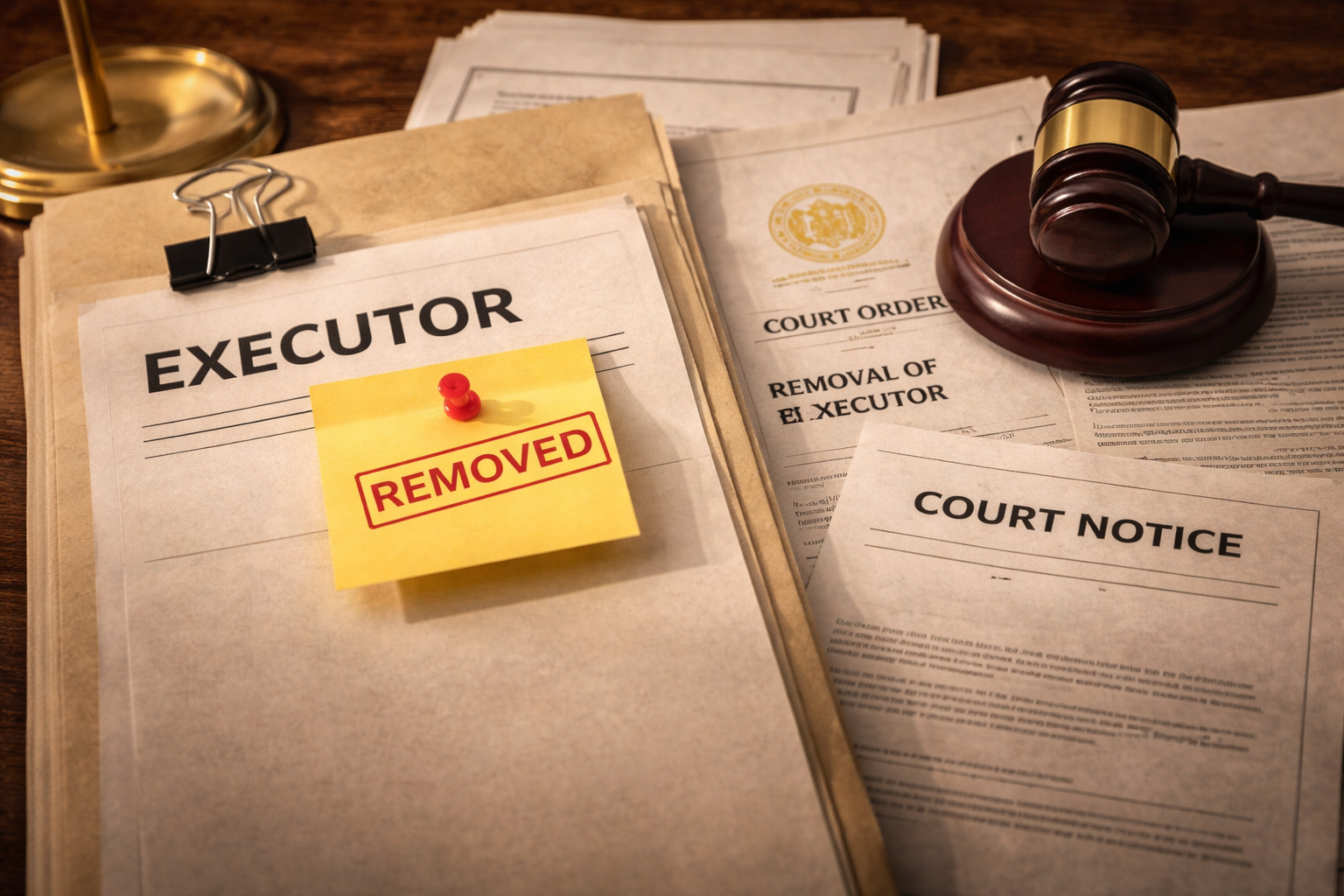
An executor plays a critical role in estate administration. They are responsible for managing assets, paying debts, and ensuring the estate is distributed according to the will. But what happens if an executor is not performing their duties properly?
In Georgia, an executor can be removed under certain circumstances. However, removal is not automatic and requires court involvement.
What Is an Executor’s Role?
Before addressing removal, it’s important to understand what an executor is expected to do.
An executor is responsible for:
- Filing the will with the probate court
- Identifying and managing estate assets
- Paying debts and expenses
- Communicating with beneficiaries
- Distributing assets according to the will
When these responsibilities are not handled properly, concerns may arise.
Can an Executor Be Removed?
Yes, an executor can be removed in Georgia, but only by the probate court. Beneficiaries or interested parties cannot remove an executor on their own.
The court will consider whether removal is justified based on specific circumstances.
Common Grounds for Removing an Executor
The court may remove an executor if there is evidence of misconduct or inability to perform duties.
Common grounds include:
- Mismanagement of estate assets
- Failure to perform required duties
- عدم communication with beneficiaries
- Conflicts of interest that harm the estate
- Misuse or theft of estate property
- Incapacity or inability to serve
Not every mistake leads to removal. The issue must be significant enough to interfere with proper administration.
Disagreements Alone Are Not Enough
It is common for beneficiaries to disagree with an executor’s decisions. However, disagreement alone is usually not sufficient for removal.
Courts generally look for:
- Clear evidence of harm or risk to the estate
- Failure to follow legal obligations
- Conduct that undermines proper administration
This helps prevent unnecessary disruptions in the probate process.
How the Removal Process Works
Removing an executor requires filing a petition with the probate court.
The process typically involves:
- Filing a formal request for removal
- Providing evidence supporting the claim
- Allowing the executor to respond
- A court hearing or review
If the court finds valid grounds, it may remove the executor and appoint a replacement.
Learn more about estate administration on our Estate Planning Services page:
https://hurbanlaw.com/estate-planning/
What Happens After an Executor Is Removed?
If an executor is removed, the court will appoint a successor.
This may be:
- A backup executor named in the will
- Another qualified individual
- A professional fiduciary
The new executor will take over administration and continue the process.
For more on how estates are handled in Georgia, visit our Probate page:
https://hurbanlaw.com/probate-lawyer-atlanta/
Risks of Removing an Executor
While removal may be necessary in some cases, it can also:
- Delay estate administration
- Increase legal costs
- Create additional conflict among beneficiaries
Because of these risks, courts typically require clear justification before removing an executor.
How to Avoid Executor Issues
Many executor disputes can be avoided with thoughtful planning.
Helpful steps include:
- Choosing a capable and trustworthy executor
- Naming a backup executor
- Keeping estate plans updated
- Providing clear instructions in estate documents
- Communicating expectations in advance
Careful selection and planning reduce the likelihood of problems.
Final Thoughts
An executor can be removed in Georgia, but only through a formal court process and for valid reasons. While disagreements may arise during estate administration, removal is typically reserved for situations involving misconduct or inability to perform duties.
If you have concerns about an executor or want to ensure your estate plan avoids these issues, Hurban Law can help you navigate your options and plan effectively under Georgia law.