She wrote thousands of songs, maintained valuable publishing rights, built businesses around her name, became closely associated with Dollywood, and created a philanthropic legacy through programs such as the Imagination Library. Following her death on August 25, 2026, questions quickly emerged about what happens to everything she built.
One reason for the interest is that Parton had no children. Her husband of nearly 60 years, Carl Dean, died in March 2025, so she also had no surviving spouse at the time of her death.
Who will ultimately receive Parton’s assets?
At this point, the public should be cautious about claiming to know. Her complete estate plan has not been publicly disclosed, and reports about possible beneficiaries remain speculative.
But the situation raises an excellent estate-planning question for people who aren’t celebrities:
If you don’t have children, who inherits your estate?
For Georgia residents, the answer depends heavily on whether you make an estate plan before you die.
Dolly Parton Died Without Children, So Who Inherits?
It is tempting to assume that because someone doesn’t have children, their closest relatives simply divide everything.
That’s not necessarily what happens when there is an estate plan.
A person can use a will, trusts, beneficiary designations, business succession arrangements, charitable planning, and other tools to determine where assets should go.
Parton’s own estate documents have remained largely private. Recent reporting has suggested that extended family members and charitable interests could play roles in her legacy, but those reports should not be confused with a publicly confirmed distribution plan.
There is also a larger point.
An estate does not necessarily have to be divided into checks and handed to relatives immediately after death.
Assets can sometimes remain in trusts or other structures and continue generating income for beneficiaries or supporting charitable purposes.
For someone with business interests, intellectual property, real estate, or other income-producing assets, that distinction can be important.
Who Inherits if You Have No Children in Georgia?
If you have a valid estate plan, you generally have significant control over whom you choose as beneficiaries, subject to applicable law and the nature of the assets involved.
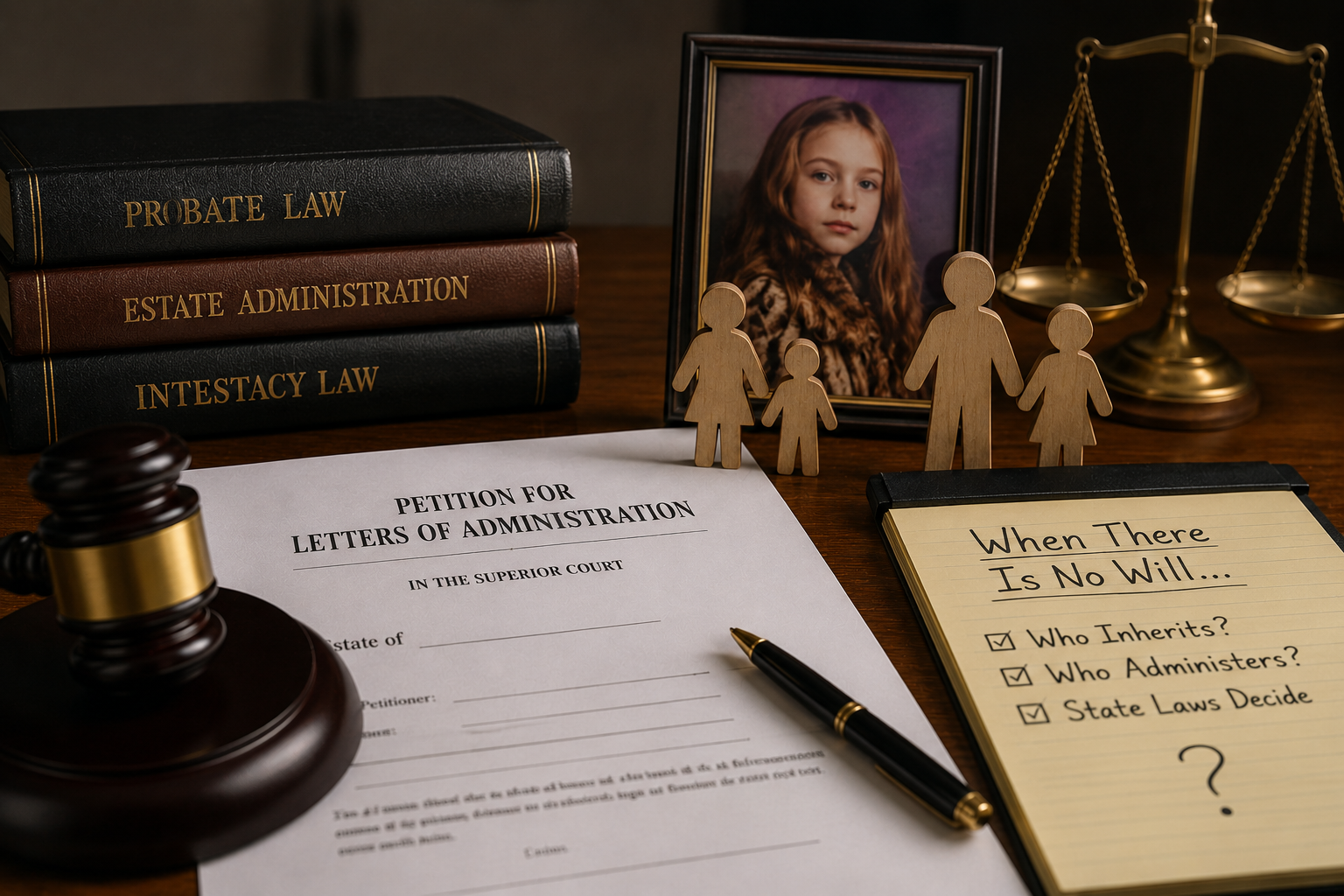
Without a valid will or other controlling arrangement, however, Georgia’s intestate succession law determines who inherits probate property.
Georgia Code § 53-2-1 establishes the state’s order of inheritance when someone dies without a will.
Georgia Code § 53-2-1: Rules of Inheritance
If someone dies with a spouse but no children or other descendants, the surviving spouse is generally the sole heir of the intestate estate.
But what happens if, like Parton at the time of her death, there is no surviving spouse and no child?
That’s where the order of relatives becomes especially important.
What if You Have No Spouse or Children?
Under Georgia intestacy law, if there is no surviving spouse, the estate generally passes to relatives in the nearest degree specified by the statute.
The order begins with:
- Children and descendants
- Parents
- Siblings and, in certain circumstances, descendants of deceased siblings
- Grandparents
- Aunts and uncles and certain descendants
- More remote relatives according to Georgia’s kinship rules
So if a Georgia resident dies without a spouse or descendants but has surviving parents, the parents generally inherit.
If there are no surviving parents, siblings may be next in line. Georgia law also addresses what happens when a sibling has already died but left descendants.
The important point is this:
Georgia’s intestacy system is based primarily on legal family relationships, not necessarily on emotional closeness.
The relative you speak to once a year might have inheritance rights while the best friend you’ve known for 40 years may have none under intestacy law.
That’s one reason estate planning can be particularly important for people without children.
Can Nieces and Nephews Inherit in Georgia?
Yes, depending on the circumstances.
Under Georgia’s intestacy statute, siblings are in the third degree of inheritance. If a sibling dies before the decedent, descendants of that deceased sibling may potentially take the share that the sibling would have received.
If no sibling survives, Georgia law also specifically addresses inheritance by surviving nieces and nephews and descendants of deceased nieces or nephews.
This can matter considerably in families without children.
A person may have close relationships with nieces and nephews and intentionally want them to inherit.
But relying on intestacy can create a distribution that is different from what that person actually wanted.
For example, you might want one niece who has helped you for years to receive your home while leaving financial assets among several other relatives.
Georgia’s default inheritance rules don’t know that.
A properly prepared estate plan can document it.
Estate Planning Without Children Gives You More Choices
Parents often have an obvious starting point for estate planning:
“I want to provide for my children.”
People without children may have a different question:
“What do I want everything I’ve built to accomplish after I’m gone?”
That can lead to a much broader conversation.
Your beneficiaries might include:
- Siblings
- Nieces and nephews
- Godchildren
- Close friends
- Long-term caregivers
- Employees
- Religious organizations
- Universities
- Animal welfare organizations
- Community organizations
- Charitable foundations
You can also combine these goals.
For example, someone might leave certain assets to family while directing another portion of the estate toward a cause that has mattered throughout their life.
There isn’t a requirement that your estate plan look like a parent’s estate plan.
You Can Leave Assets to Friends
This point is especially important for people whose closest relationships aren’t necessarily biological ones.
Georgia intestacy laws focus on legally recognized family relationships.
They do not automatically ask:
Who was your closest friend?
Who checked on you every week?
Who helped you after surgery?
Who spent holidays with you?
Who do you personally consider family?
If you want a friend or another non-relative to inherit from you, that intention generally needs to be addressed through appropriate estate planning rather than left to intestacy.
Without planning, someone who was enormously important in your life could receive nothing from your probate estate.
Charities Can Be Part of Your Estate Plan
Dolly Parton’s philanthropic work makes this aspect of the discussion particularly relevant.
She founded the Dollywood Foundation and its Imagination Library, which grew into an international literacy program that has distributed hundreds of millions of books to children. Her charitable work also extended to education, disaster relief, healthcare, and medical research.
We do not yet know exactly what role charitable organizations will play in Parton’s private estate plan.
But charitable giving is an important option for anyone considering what their legacy should look like.
Someone without descendants may decide that part of an estate should support:
- A local nonprofit
- A scholarship
- A church or religious institution
- Medical research
- An animal rescue
- A university
- A community organization
- Another cause important to them
And charitable planning isn’t limited to celebrities or multimillion-dollar estates.
A charitable gift can be a specific dollar amount, a particular asset, a percentage of an estate, or part of a more comprehensive planning structure.
What Happens to Business Interests and Royalties?
Parton’s estate also illustrates another issue that ordinary estate plans sometimes overlook:
Some assets keep producing value after the owner dies.
Parton reportedly wrote nearly 3,000 songs, and her catalog includes works that continue generating revenue through recordings, licensing, performances, streaming, and other uses. She also had substantial business interests.
Most Georgia residents don’t own a catalog of internationally famous songs.
But plenty own assets that can continue producing income, including:
- Rental properties
- Family businesses
- Professional practices
- Copyrights
- Books
- Photography
- Online businesses
- Websites
- Monetized content
- Licensing rights
- Royalties
Those assets require a different planning question than simply:
“Who gets it?”
You may also need to ask:
“Who should manage it?”
A Trust Can Help Preserve Assets Instead of Dividing Them
Suppose someone owns a successful family business and wants three nieces and nephews to benefit from it.
Leaving each person a direct one-third interest isn’t necessarily the only option, or even the best one.
Depending on the circumstances, a trust or business succession arrangement might allow assets to remain managed together while beneficiaries receive financial benefits according to the plan’s terms.
This can be particularly useful when an asset:
- Produces ongoing income
- Requires professional management
- Would lose value if divided
- Should remain in a family
- Involves intellectual property
- Is intended to support beneficiaries over many years
Estate planning is not always about dividing everything.
Sometimes it is about preserving something so it can continue working after you’re gone.
Hurban Law discusses trusts and other planning tools as part of its Georgia estate planning services.
Who Should Handle Your Estate if You Don’t Have Children?
Beneficiaries aren’t the only decisions that matter.
You also need to decide who should be responsible for carrying out your plan.
Parents frequently name an adult child as executor, trustee, financial agent, or healthcare decision-maker.
If you don’t have children, you need to make those choices differently.
You might consider:
- A sibling
- A niece or nephew
- A trusted friend
- Another relative
- A qualified professional fiduciary, when appropriate
The person you trust emotionally isn’t automatically the person best suited to administer an estate.
An executor or trustee may need to handle paperwork, financial accounts, tax matters, real estate, deadlines, beneficiaries, and difficult decisions.
Choose based on the job that actually needs to be done.
Estate Planning Without Children Is About More Than Inheritance
There’s another mistake people without children sometimes make:
“I don’t have kids, so estate planning isn’t that important for me.”
Estate planning also addresses what happens during your lifetime.
If you become seriously ill or incapacitated, who can handle financial matters for you?
Who can communicate with doctors and make healthcare decisions if you cannot?
Who knows where your important documents and accounts are?
Who can step in to manage property or a business?
These questions can become even more important when there is no spouse or adult child who would naturally be expected to help.
A complete estate plan may therefore consider documents such as a financial power of attorney and advance directive for healthcare in addition to a will or trust.
Your Beneficiary Designations Still Matter
A will does not necessarily control every asset.
Life insurance policies, retirement accounts, payable-on-death accounts, and other assets may have beneficiary designations that determine who receives them.
That means someone without children should review those designations carefully.
An old beneficiary designation might still name:
- A deceased parent
- A former partner
- A sibling with whom you are no longer close
- Someone you named decades ago
Your current estate plan and beneficiary designations should work together.
Hurban Law has also addressed this issue in its article Does a Will or Trust Override Beneficiary Designations?.
What About a Godchild?
Parton’s close relationship with Miley Cyrus has predictably led to online speculation about whether Cyrus might inherit from her.
There is currently no publicly disclosed estate document establishing such an inheritance, and viral claims about particular songs or royalties should not be treated as established fact.
But it raises a useful legal question.
Does being someone’s godchild automatically create inheritance rights?
Generally, the title “godchild” by itself does not place someone in Georgia’s statutory order of intestate heirs.
If you want a godchild, close family friend, or other person outside the statutory line of inheritance to receive assets, you should address that intention through appropriate estate planning.
Don’t assume the closeness of the relationship creates an inheritance right.
What if You Want Different Family Members to Receive Different Things?
Equal isn’t always the same as intentional.
Imagine someone has three nieces.
One has helped operate the family business for 15 years.
Another shares the owner’s interest in a particular piece of property.
The third lives elsewhere and has no interest in either asset.
Simply dividing everything into thirds may create unnecessary problems.
An estate plan can instead consider what each asset is, who is suited to receive or manage it, and whether equalization through other property makes sense.
The goal isn’t necessarily to make every beneficiary’s inheritance identical.
It’s to make the distribution reflect your actual intentions.
What Happens if You Don’t Make a Plan?
For a Georgia resident who dies without a valid will, Georgia’s intestacy laws determine the heirs to probate property.
That may produce an acceptable result.
Or it may be completely different from what the person would have chosen.
A close friend may receive nothing.
A favorite charity may receive nothing.
A niece you intended to help may receive less than expected, or nothing at all depending on which relatives survive you.
Property may be divided among several relatives when you would have preferred to keep it together.
The law cannot know your personal relationships and priorities.
It can only apply its default rules.
Estate Planning Without Children Can Be About Legacy
Dolly Parton’s story makes the word legacy unusually easy to understand.
Her legacy isn’t simply a dollar amount.
It’s music people will continue listening to. Businesses will continue operating. Intellectual property may continue generating income. And the literacy programs she championed can continue helping children she never personally met.
Your legacy doesn’t need to be famous to deserve the same kind of thought.
It might be:
- Keeping a family property in the family
- Helping a niece buy her first home
- Supporting a sibling
- Leaving something meaningful to a lifelong friend
- Funding an annual scholarship
- Supporting a local animal shelter
- Giving to your church
- Preserving a business you spent decades building
Estate planning gives you the opportunity to decide what the things you’ve accumulated should mean after you’re gone.
Questions to Ask if You Don’t Have Children
If you don’t have children, consider these questions:
- Who do I actually want to inherit from me?
- Would Georgia intestacy law produce that result?
- Are there friends or non-relatives I want to include?
- Do I want nieces, nephews, or godchildren to inherit?
- Are there charities I want to support?
- Who should serve as my executor?
- Who should serve as trustee if I create a trust?
- Who should make financial decisions if I’m incapacitated?
- Who should make healthcare decisions for me?
- Do I own assets that should remain together rather than be divided?
- Do I have a business that needs a succession plan?
- Are my beneficiary designations current?
- What do I want my estate to accomplish rather than simply distribute?
Those questions often lead to a much more useful estate plan than starting with a list of documents.
Frequently Asked Questions About Estate Planning Without Children
Who inherits if you die without children in Georgia?
It depends on which other relatives survive you. If you have a spouse but no descendants, the spouse is generally the sole heir of the intestate estate. If there is no spouse or descendant, Georgia law looks to relatives according to its statutory order, beginning with parents, followed by other specified relatives.
Who inherits if you have no spouse or children in Georgia?
If there is no spouse or descendant, surviving parents are generally ahead of siblings under Georgia’s intestacy statute. If there are no surviving parents, siblings and potentially descendants of deceased siblings may inherit. More remote relatives may inherit if closer relatives do not survive.
Can I leave everything to my nieces and nephews?
A person can generally use estate planning to intentionally provide for nieces and nephews, subject to applicable law and the assets involved. A properly prepared plan is especially important if the desired distribution differs from Georgia’s intestacy rules.
Can I leave my estate to a friend instead of family?
Estate planning can generally be used to provide for friends and other non-relatives. A friend, however, ordinarily would not inherit simply because of the relationship if the estate instead passes under Georgia intestacy law.
Can I leave part of my estate to charity?
Yes. Charitable organizations can be incorporated into an estate plan in a variety of ways. The appropriate method depends on the assets, charitable goals, tax considerations, and overall estate plan.
Do I need a trust if I don’t have children?
Not necessarily. Whether a trust makes sense depends on your assets and goals, not simply whether you have children. Trusts can be useful for asset management, privacy, business or property planning, charitable objectives, and other purposes.
Does a godchild automatically inherit?
Generally, no. Being called someone’s godchild does not by itself place that person within Georgia’s statutory order of intestate heirs. If you want a godchild to inherit, that goal should be addressed through appropriate planning.
Final Thoughts
Dolly Parton’s estate is attracting attention because of the extraordinary career and assets she left behind.
But the underlying question is relevant to thousands of Georgia residents who will never own a music catalog or a theme park:
If you don’t have children, what do you want to happen to everything you’ve built?
Without a plan, Georgia law may answer that question for your probate estate according to family relationships established by statute.
With thoughtful planning, you have considerably more opportunity to define your own legacy.
That could mean providing for siblings, nieces and nephews, friends, charities, or people who feel like family even when they aren’t related to you. It could also mean preserving a business, supporting a cause, or creating something that continues long after your death.
If you don’t have children and aren’t sure what your estate plan should look like, Hurban Law can help you evaluate your options and create a plan that reflects the people, property, and causes that actually matter to you.
For help with wills, trusts, beneficiary planning, and other estate-planning matters, visit Hurban Law’s Estate Planning page.