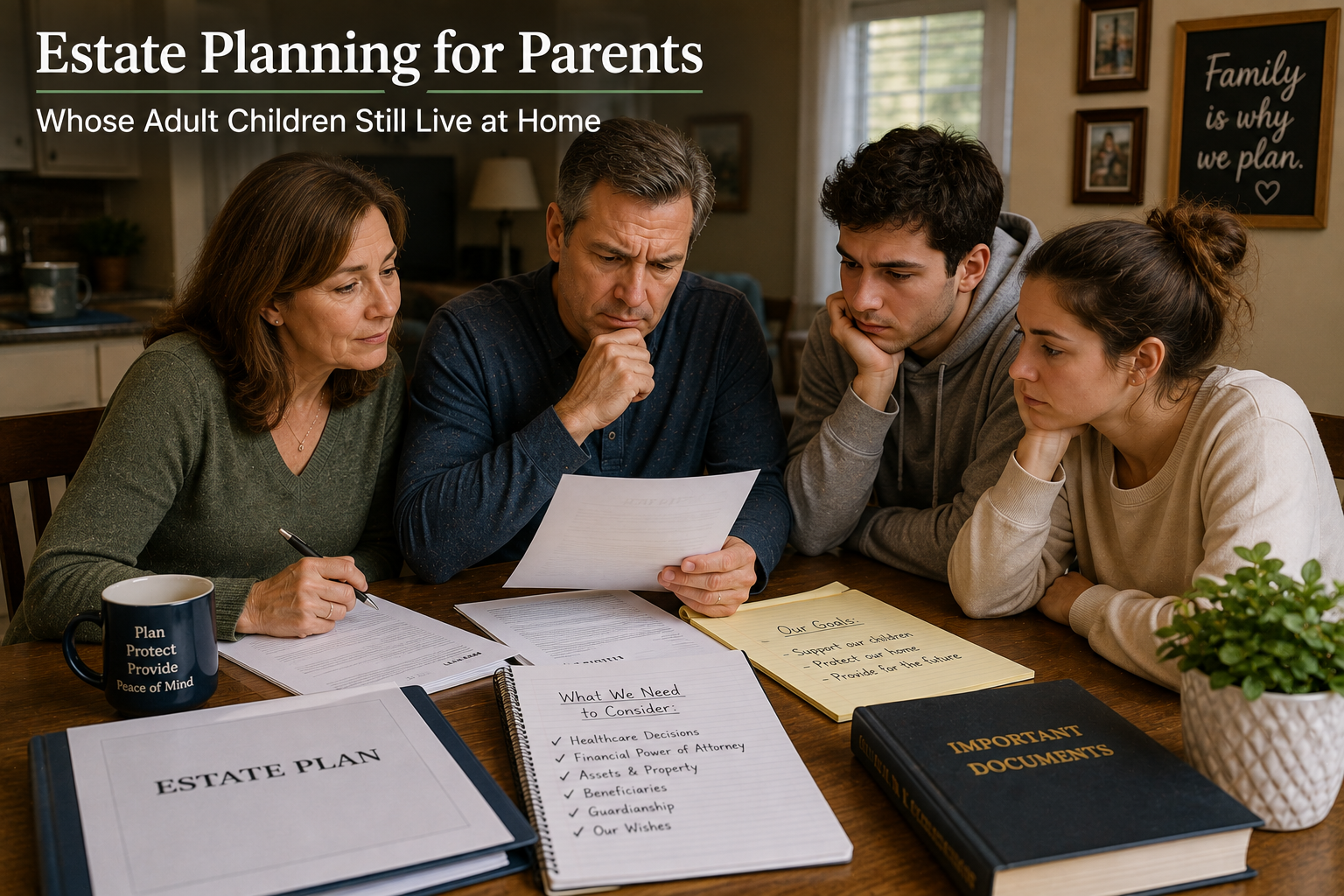
For many families, the expectation used to be simple: children would graduate, move out, and establish households of their own.
Today, that timeline often looks different.
Adult children may remain at home while finishing school, saving for a home, paying off student loans, changing careers, or helping care for aging parents. In some cases, returning home after living independently has become part of modern family life.
While these living arrangements can work well, they also create estate planning questions that many families never consider.
In 2026, effective estate planning should reflect not only who is in your family but also how your family lives today.
A Growing Reality for Many Families
There are many reasons an adult child may continue living with their parents.
Some common examples include:
- Completing college or graduate school
- Saving for a first home
- Recovering from financial setbacks
- Transitioning between jobs
- Helping care for a family member
- Returning home after a divorce or other major life change
Every family’s circumstances are different, and there is no single “right” timeline for becoming independent.
The important point is that your estate plan should reflect your current reality rather than assumptions made years ago.
Living Together Can Affect Estate Planning
When an adult child lives at home, practical questions may arise that do not exist when children have established separate households.
For example:
- Who would continue living in the home if something happened to you?
- Does your estate plan address the family residence appropriately?
- Are there financial responsibilities that depend on the current living arrangement?
- Have expectations been discussed among siblings?
These are not simply housing questions. They are estate planning considerations that deserve attention.
The Family Home May Mean Different Things to Different People
For one child, the family home may represent stability and familiarity.
For another, it may simply be an asset that should eventually be sold.
If one adult child lives in the home while siblings live elsewhere, each person may naturally view the property differently.
Without clear planning, differing expectations can create uncertainty after a parent’s death.
Learn more about comprehensive planning on our Estate Planning Services page:
Fairness Doesn’t Always Look the Same
Parents often want to treat their children fairly.
When one child lives at home, however, questions may naturally arise.
For example:
- Should living arrangements affect future inheritance?
- Should ongoing housing be considered during estate planning?
- How should responsibilities and expectations be addressed?
There is no universal answer.
Thoughtful estate planning allows parents to make intentional decisions that reflect their family’s circumstances and goals.
Consider More Than the Will
Estate planning involves more than deciding who inherits property.
Parents may also wish to review:
- Financial powers of attorney
- Healthcare directives
- Beneficiary designations
- Fiduciary appointments
- Long-term planning for the family home
As family relationships evolve, these documents should evolve as well.
Communication Can Help Prevent Misunderstandings
Families do not always need to discuss every detail of an estate plan.
However, when one child continues living at home, it may be helpful to communicate general expectations regarding:
- Future housing arrangements
- Long-term goals for the property
- Responsibilities after a parent’s death
- The reasoning behind certain planning decisions
Clear communication can reduce uncertainty and help preserve family relationships.
Life Changes, and So Should Your Plan
An adult child living at home today may purchase a home next year.
Another child who currently lives across the country may move back to Georgia.
Financial circumstances, careers, marriages, and caregiving responsibilities can all change over time.
Regular estate plan reviews help ensure your legal documents continue to reflect your family’s current situation rather than an outdated version of it.
For more information about probate and estate administration, visit our Probate page:
Estate Planning Should Reflect How Your Family Lives Today
Estate planning works best when it reflects real life.
That includes:
- Current living arrangements
- Family relationships
- Property ownership
- Long-term financial goals
- Future housing expectations
Plans that evolve alongside your family are often better equipped to provide clarity when it matters most.
Final Thoughts
More families are discovering that adulthood does not always follow a traditional timeline. Whether an adult child is living at home temporarily or for the foreseeable future, that reality deserves thoughtful consideration during the estate planning process.
If your family circumstances have changed since you last reviewed your estate plan, Hurban Law can help you create a plan that reflects your current life, protects your goals, and provides clarity for the future under Georgia law.